
Arizona Public Records Law and Yavapai County
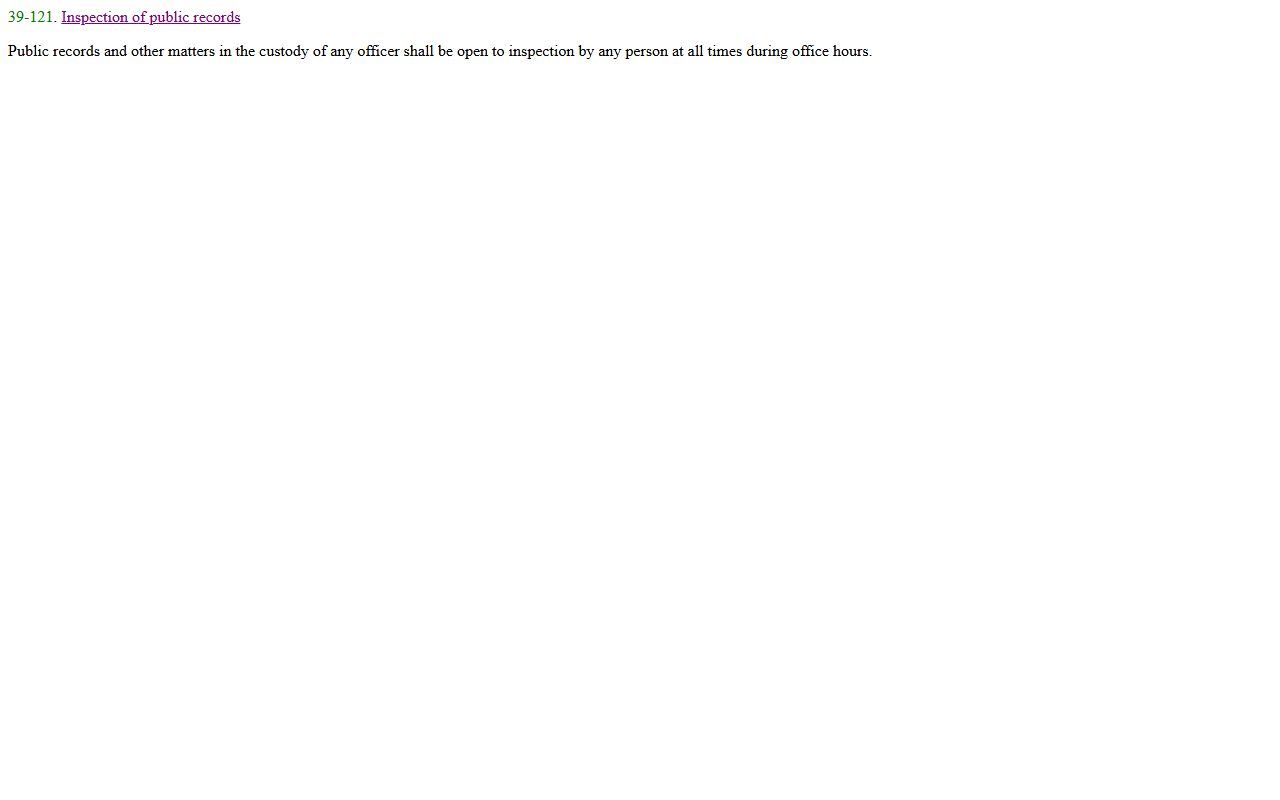
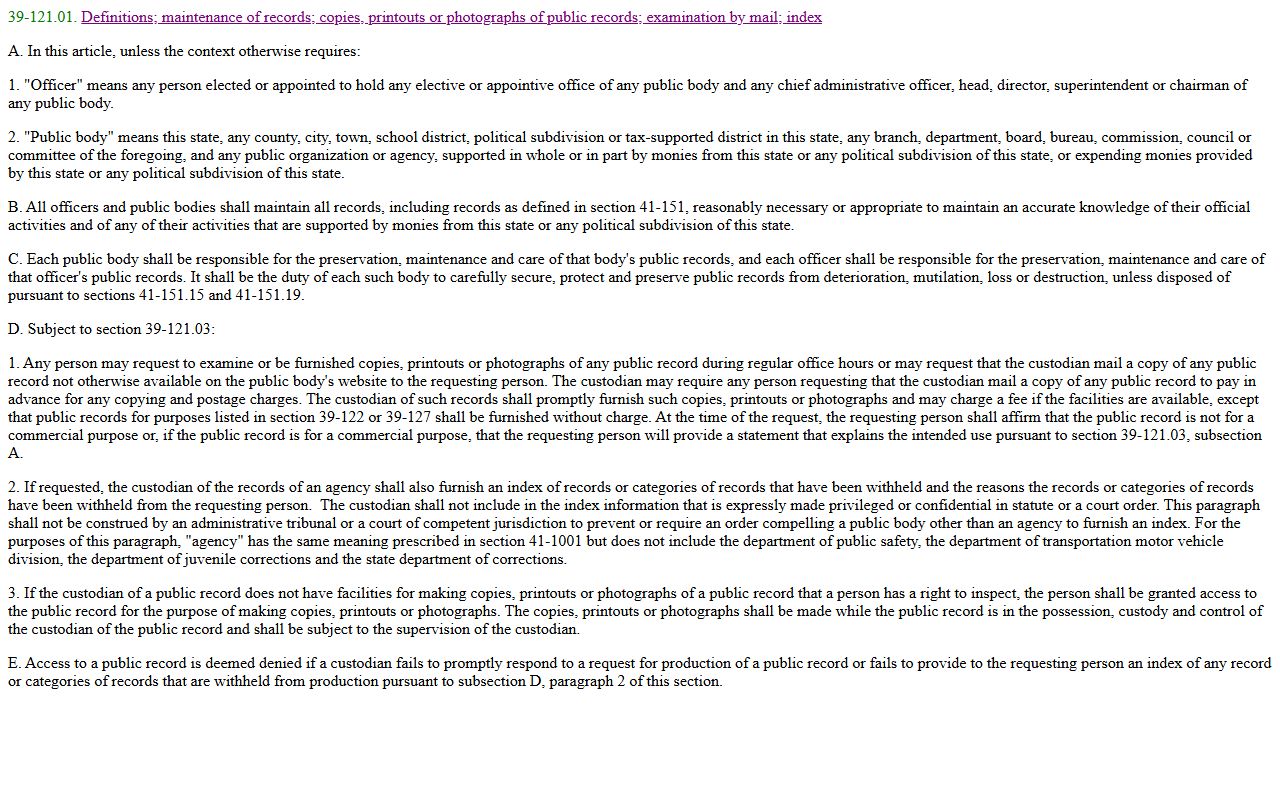
Arizona starts from a strong open-records baseline. A.R.S. § 39-121 states that public records in an officer's custody are open to inspection by any person during office hours. The companion section, A.R.S. § 39-121.01, defines the terms "officer" and "public body" and requires each office to keep records of all official activities. The same section covers copies, printouts, photos, and mail handling.
Yavapai County follows those rules across every county department. The Clerk of Superior Court holds Superior Court case files. The Sheriff holds law enforcement records. The Recorder holds deeds and other property files. Each office is a separate "officer" under Title 39 and runs its own request desk.
The Title 39 framework gives three levels of access. Inspection is the base right. Copies cost a small per-page fee. Certified copies need a flat charge plus the per-page rate. A request can be informal. The law does not force a person to put it in writing, though most offices ask for written intake so the file pull is clean.
Judicial Records Under Arizona Supreme Court Rule 123
Court records sit under a parallel rule. Arizona Supreme Court Rule 123 governs access to judicial records. It treats every judicial record as open to the public unless a rule, statute, or court order closes the file. Rule 123 spells out closed and confidential records, sets the standard for bulk data requests, and lays out the commercial purpose process for case data sold or repackaged for profit.
The Yavapai County Clerk of Superior Court applies Rule 123 to case files, exhibits, and minute entries. The Arizona Judicial Branch runs Public Access Case Lookup as the free statewide tool. Documents on Superior Court civil and criminal cases filed on or after July 1, 2010 come through Arizona eAccess. Sealed cases, juvenile dependency files, and protected items stay off both portals.
A person who wants a closed file viewed has to file a motion in the court that issued the order. The clerk cannot release sealed materials without that court order. Self-Service Center forms help with set-aside, sealing, and marijuana expungement filings.
Yavapai County Sheriff Records vs Court Records
Two big record holders in the county run on separate tracks. Court files live with the Clerk of Superior Court at 120 South Cortez Street in Prescott and at the Camp Verde courthouse. Law enforcement files live with the Yavapai County Sheriff's Office at 255 East Gurley Street in Prescott. The Sheriff also runs the two adult detention centers. A person who wants a booking sheet, a jail roster entry, or a public incident report contacts YCSO Records. A person who wants a charging document or a sentencing minute entry contacts the Clerk.
Both offices follow Title 39. The Clerk also follows Rule 123. The Sheriff handles certain investigative records under exemptions for ongoing cases, victim privacy, and confidential informants. More on charge-side filings sits on the court records page. More on arrest-side data sits on the arrest records page. Marriage and divorce documents are detailed on the marriage and divorce page.
How to File a Public Records Request in Yavapai County
The Clerk of Superior Court accepts public records requests four ways. A person may walk into Room 207 in Prescott or the Camp Verde clerk counter. Email goes to YavapaiRecordsManagement@courts.az.gov. Mail goes to the Prescott records desk. The records phone is (928) 777-7934. Office hours run Monday through Friday, 8:00 a.m. to 5:00 p.m.
- Pick the right office. The Clerk holds Superior Court files. The Recorder holds deeds. The Sheriff holds incident reports. The Justice Courts hold small claims, eviction, traffic, and misdemeanor files.
- Describe the records. Give the case number, the party names, the date or date range, and the document type. A specific request gets a faster reply.
- Pick a delivery format. Choose paper pickup, paper by mail, electronic delivery, or certified copy with a raised seal.
- Send the request. Use email for most cases. Use mail with a check for older files. Use the in-person counter for same-day certified copies.
- Wait for a quote. The Clerk replies with the total amount due. The quote covers per-page copy fees, certification, postage, and any extra for large jobs.
- Pay the fee. The Clerk online payment center takes credit cards. The counter takes cash, check, or card. Mail-in payment is fine with check or money order.
- Receive the records. Pickup happens at the counter. Mailed copies leave the office once payment clears. Add $8.00 for postage if a self-addressed stamped envelope is not enclosed.
A requester who needs help can call the records line. Verde Valley case files can be pulled at Camp Verde with no need to drive to Prescott. The records team can also point a caller to the right Justice Court precinct.
Yavapai County Public Records Request Fields
A clean request makes the pull faster. The Clerk's intake email or written request form looks for a short list of fields. Required items are flagged. Optional items help the records clerk match the right file when names are common or the case is old.
| Field | Type | Required | Notes |
|---|---|---|---|
| Requester Name | Text | Yes | Full legal name of the person asking. |
| Contact Info | Phone, email, or mailing address | Yes | Needed for the fee quote and pickup. |
| Case Number | Format like CV-200812345 | No | Speeds the file pull when known. |
| Party Names | Text | No | Used to find a case when the number is lost. |
| Documents Requested | Text | Yes | List each document type or filing date. |
| Delivery Format | Paper / Electronic / Certified | Yes | Drives the fee total and prep time. |
| SASE Included | Yes / No | No | Skips the $8.00 postage charge. |
| Payment Method | Card / Check / Cash | Yes | Cards run through the online payment center. |
| Commercial Purpose | Yes / No statement | Yes | Required under A.R.S. § 39-121.03 if for resale. |
Email requesters can paste a short request into the body. A scan or photo of a written form works as well. The Clerk replies with the quote first, then releases the file after payment.
Yavapai County Public Records Fees
Clerk fees follow A.R.S. § 12-284. Plain copies are billed per page. Certified copies add a flat charge for the raised seal. Marriage certificates carry their own fixed fee. Justice Court filings use a separate fee table.
| Item | Amount |
|---|---|
| Plain copy per page | $0.50 |
| Certified copy with raised seal | $35.00 + $0.50 per page |
| Certified marriage certificate | $35.00 |
| Abstract of marriage | $35.00 |
| Postage and handling (no SASE) | $8.00 |
| Justice Court civil complaint filing | $86.00 |
| Justice Court small claims filing | $30.00 |
| Justice Court eviction filing | $41.00 |
| Justice Court civil answer | $47.00 |
| Justice Court certification | $33.00 |
| Justice Court subpoena | $33.00 |
| Justice Court service by mail | $8.00 |
| Justice Court writ | $38.00 |
The Clerk sends a fee quote before the file is pulled. Large requests for bulk court data may carry additional charges under Rule 123. Payment goes through the Clerk online payment center, the counter, or a mailed check.
Commercial Purpose Requests Under A.R.S. § 39-121.03
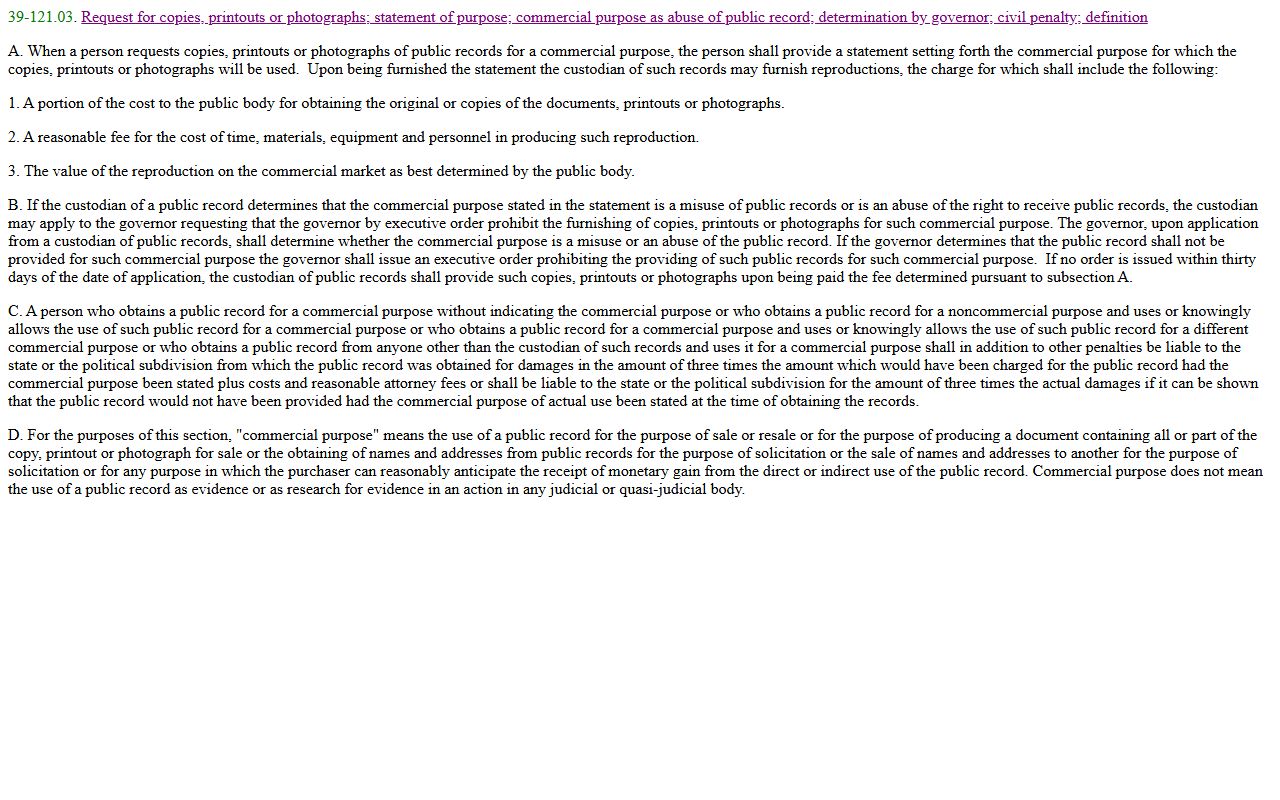
A person who wants Yavapai records for a commercial purpose must say so. A.R.S. § 39-121.03 requires a written statement that lists the commercial use of the records. The statute lets the office charge a higher fee when the request is for resale, marketing, or other for-profit use. The fee can include a value-based component for the data, the labor cost, and the cost of the medium.
Court records under Rule 123 follow the same logic. Bulk case data sold to data brokers, news aggregators, or research firms triggers the commercial purpose rule. A requester who lies about the purpose can be liable for the difference and may face a civil penalty. The Clerk reserves the right to refuse a commercial request that fits a closed category.
What To Do After a Denial Under A.R.S. § 39-121.04
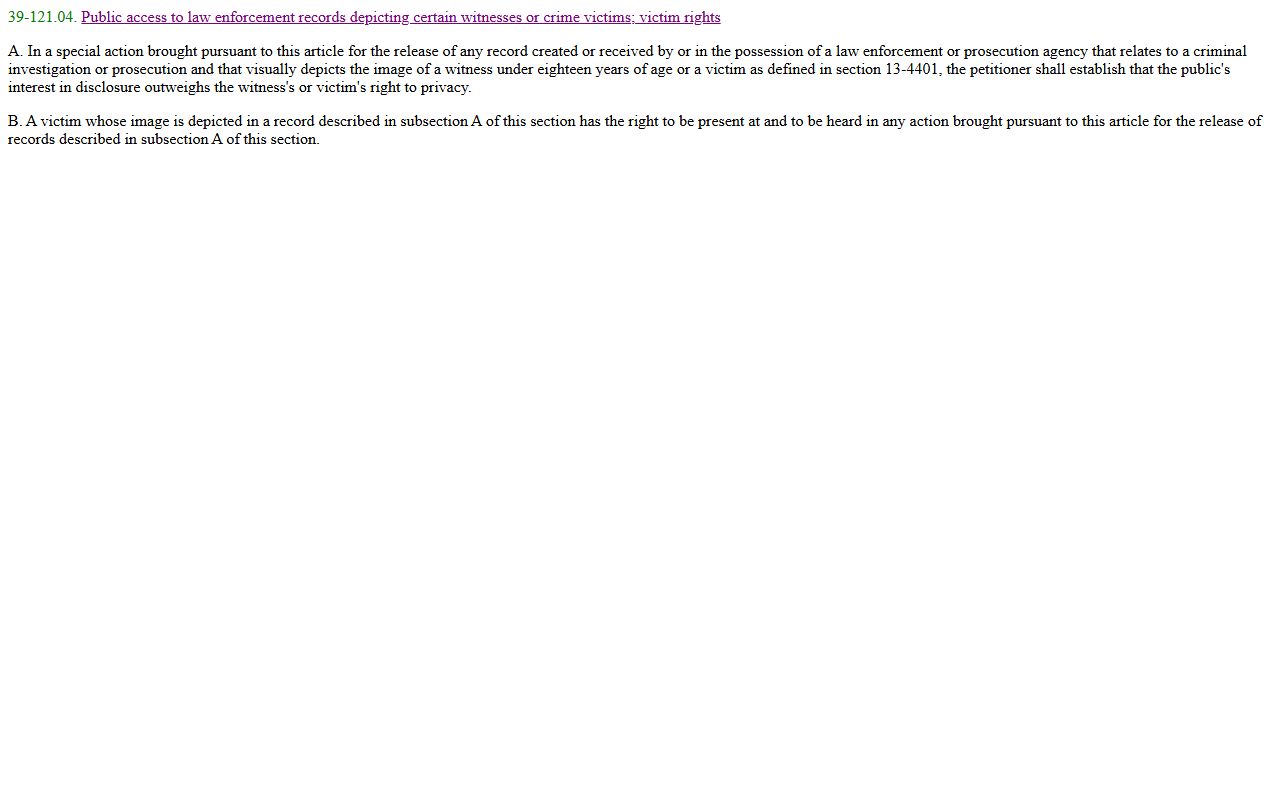
A denial is not the end of the road. A.R.S. § 39-121.04 gives any person who is denied access the right to a special action in superior court. The court reviews the denial. A successful requester may also seek attorney fees and other legal costs where the statute allows.
The first step is a written request to the office that holds the file. The second step, after a refusal, is a written appeal up the agency chain. The third step is the special action. The action runs against the public body, not against an individual employee. A judge can order the office to release the file, redact only the protected parts, or set a fee that matches the statute.
A requester who needs help understanding the appeal route can use the Yavapai Self-Service Center. The center does not give legal advice but has forms and procedural notes. Civil legal aid sits with Community Legal Services in Prescott.
Confidential Records Excluded From Public Disclosure
Not every county file is open. Several categories are closed by statute or court rule. Sealed cases under A.R.S. § 13-911 are pulled from public search. Juvenile court records under A.R.S. § 8-208 stay confidential except for narrow access groups. Behavioral health records are shielded by A.R.S. § 36-509. Public Defender case files are guarded by attorney-client privilege.
- Sealed criminal records (set aside under § 13-905 or sealed under § 13-911)
- Juvenile dependency, adoption, severance, and delinquency files
- Behavioral health and substance use treatment notes
- Attorney-client material from Public Defender files
- Victim names, addresses, and contact details
- Social Security numbers
- Financial account numbers
- Minor identifiers (date of birth, school, home address)
- Protected sex offender registry entries
- Records under a court protective order
The Clerk redacts the protected fields and releases the rest of the document when possible. A blanket denial is rare. More on day-to-day case file searches sits on the court records page and the Clerk of Court page. Common questions are answered on the FAQ page.